
A guide to the Australian window market
Five questions to ask any window quote. Including ours.
Most people compare window quotes on price. The frame decides how the window performs for the next thirty years, and the word "aluminium" on its own tells you almost nothing. Here is what the people who don't sell windows say.
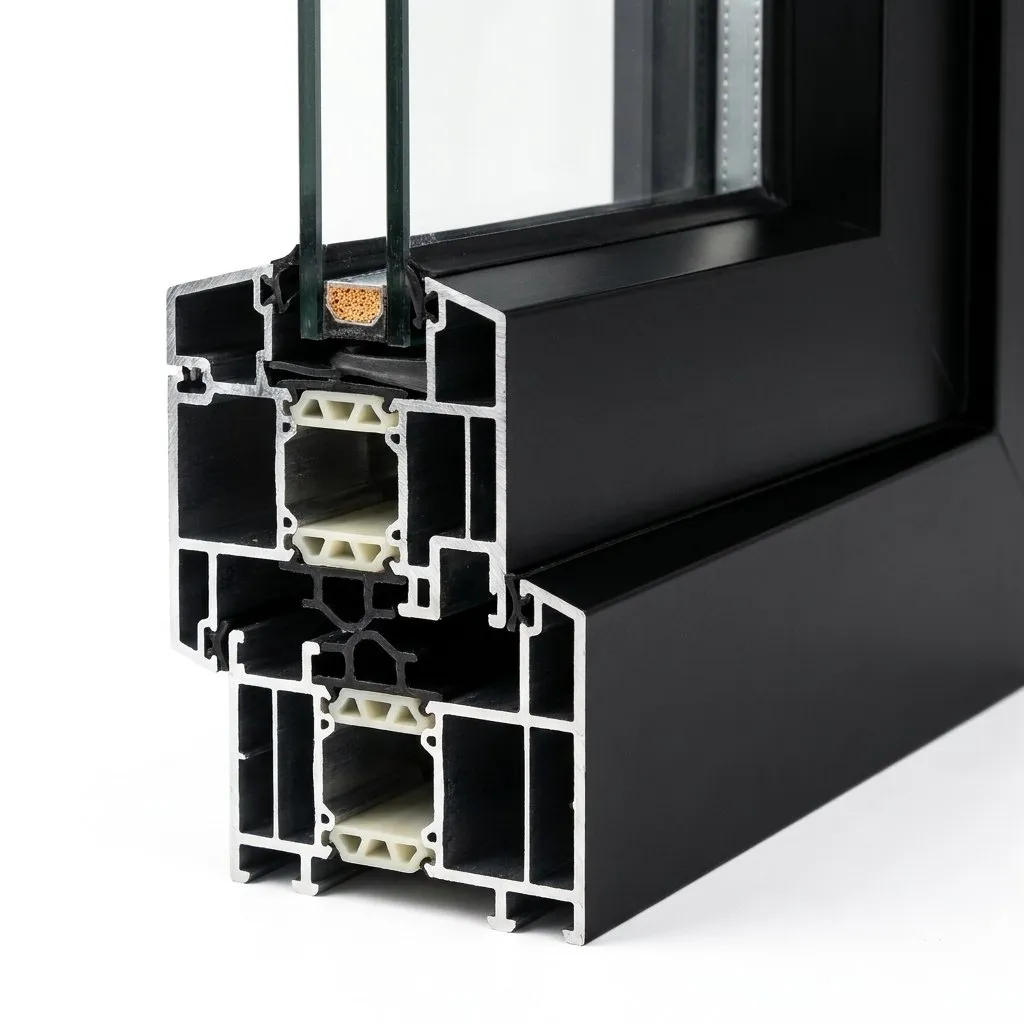
QUESTION 01
Does the quote say “thermally broken”?
Fair to say first: plain aluminium frames are light, strong and durable, which is why three in four Australian houses have them. They are also a very good conductor of heat, and that is the part most quotes leave out.
If aluminium is selected for the frame, ensure the window is thermally broken.
Australian Government, energy.gov.au
Thermally broken frames are among the highest performing frames available, and are appropriate for almost any climate.
Australian Government, YourHome
In aluminium frames with no thermal break, heat is conducted up to six times more readily through the frame than the glass.
Renew magazine, independent Australian not-for-profit
More from the sources
Aluminium frames (with no thermal break) form a thermal bridge into your home and are prone to condensation.
Australian Government, YourHome, Condensation
Independent testing: a thermally broken frame is almost 60% more thermally efficient
than the same frame without it.
BRANZ, New Zealand's building research body
Touch the inside of the frame. Same glass, same system.
Fig. 01 Six degrees cooler on a hot day, eight degrees warmer on a cold morning. The only change is the insulator inside the frame. Australian aluminium system house test data.
QUESTION 02
What happens to the frame at 40 degrees, in the colour you chose?
Fair to say first: uPVC (plastic) frames insulate very well. On a cold, still day a good plastic frame will match or beat ours on insulation. The question is what the frame does in the sun, because it is plastic.
Europe's window testing institute measured dark plastic frames (Monument, Black and the darker greys) at over 70 to 85 C
in direct sun, white at about 45 C. The plastic makers' answer is to reduce maximum sizes depending on colour
.
ift Rosenheim, Germany
uPVC window profiles designed for the northern hemisphere, are often unable to withstand Australia's extreme climate, leading to embrittlement, discolouring, and fading over time.
Architecture & Design, reporting the Vinyl Council of Australia's own testing scheme
The plastic industry's own rulebooks: coloured PVC frames must always be reinforced
with steel, their permitted sizes are as a rule smaller
than white.
German PVC profile quality association, 2018; British Plastics Federation, 2021
The sun can render them (PVC windows) brittle and discoloured. Plus, plastic has nearly half the lifespan of well-maintained wood or metal.
Ideal Home
More from the sources
Extreme temperatures can cause the (uPVC) frame to expand or shrink and therefore the window or door won't move as smoothly - it might 'stick'.
Which?, UK consumer body
Cheap uPVC will warp and discolour long before a higher quality frame would.
Homebuilding & Renovating
Dark plastic (Monument, Black and the darker greys) in the sun sits above the point where plastic starts to give.
Frame temperature, degrees C
Fig. 02 Measured frame temperatures from ift Rosenheim; the heat deflection temperature of rigid PVC (69 C) and the service limit of window aluminium (160 C) from material data.
QUESTION 03
If plastic is so common in Europe, why not here?
Fair to say first: plastic is the standard house window across much of Europe for one reason: it is one of the cheapest windows you can buy there. In Australia the same window arrives at a premium price, not because the material is premium (it is the cheapest part of the window) but because nearly all of it is imported from Europe, and shipping and local labour are what you pay for.
In uPVC's home market a standard installed window costs EUR 598 in plastic and EUR 1,153 in aluminium.
VFF, German window association, 2024
Residential projects are often price-driven, which is why low-cost PVC windows are used.
Interconnection Consulting, study author
More from the sources
In Britain, where plastic is the standard house window, commercial glazing is over 80%
aluminium; in France about 70 percent of non-residential windows are aluminium.
Palmer Market Research; UFME, 2023
Here, uPVC is not extruded locally so it is imported
; imported European plastic windows are made in the factory to standard 'off the shelf sizes' and not to individual sizes
.
RMIT for Sustainability Victoria; District Court of South Australia
Who uses what
the cheapest window on the market there
Fig. 03 Interconnection Consulting (Western Europe, 2023); ABC Radio National; Vinyl Council of Australia. In Europe plastic wins on price for small windows; here it is a European import sold at a premium.
QUESTION 04
What will this window look like in ten years?
Fair to say first: timber is beautiful and insulates well, and a well-made plastic window will serve a smaller opening for a long time. The question is what each one asks of you over the years, and what it does to the value of the house.
Architectural aluminium finishes are tested to ten years of Florida sun and can have a life expectancy of thirty years or more
.
Qualicoat, coating licensing body
The frames of PVC-u windows need cleaning every six months to prevent discolouration from dirt and ultra violet light.
For repairs, complete replacement is often the only viable option
.
Historic England
More from the sources
Timber needs repainting every 4 to 8 years depending on exposure and swells and shrinks with changes in atmospheric humidity
.
Heriot-Watt University; Australian Government YourHome
Replacement plastic (PVC-u) windows pose one the greatest threats to the heritage value of historic areas.
UK estate agents ranked them the biggest threat to property values in conservation areas
.
Historic England
Black aluminium windows will always look more expensive than their timber counterpart painted black.
Dominic Bagnato, architect, Houzz Australia
84% (of architects and specifiers) said they specified aluminium most regularly.
Survey published in ADF, 2022
Published lifespan, and what each one asks of you
finish tested to 10 years of Florida sun; wash it
wash every six months to prevent discolouration
repaint every 4 to 8 years, depending on exposure
Fig. 04 Ideal Home (uPVC about half the life of aluminium); Historic England (six-month wash); Heriot-Watt University (timber repaint by exposure; alu-clad 20 to 30 years).
QUESTION 05
How big is the panel, and how wide is the frame around it?
Fair to say first: for a smaller window, a tilt and turn, or a Passive House build, a plastic frame is a sound choice. Big sliding doors and floor to ceiling glass are a different job.
Aluminium is undoubtedly the framing material of the moment ... it perfectly suits the modern desire for small frames, minimal bars and maximum glass.
Homebuilding & Renovating, 2024
We can supply sliding door but, your door must be aluminium, because of size.
A Melbourne uPVC supplier to its own customer, recorded by VCAT, 2016
More from the sources
Plastic (PVC) frames tend to be thick with a restricted selection of colour options, they also lack in strength therefore cannot support large panes of glass.
Grand Designs Magazine
Metal such as aluminium, steel and bronze is strong enough to support expanses of glazing without a bulky frame ... a thermal break is a must.
Grand Designs Magazine, 2022
The lack of strength also means the (uPVC) frames have to be thicker to support the weight of the glazing.
Homebuilding & Renovating, 2025
Stiffness, GPa
about 20 times stiffer
Heaviest sliding panel, kg
all thermally broken
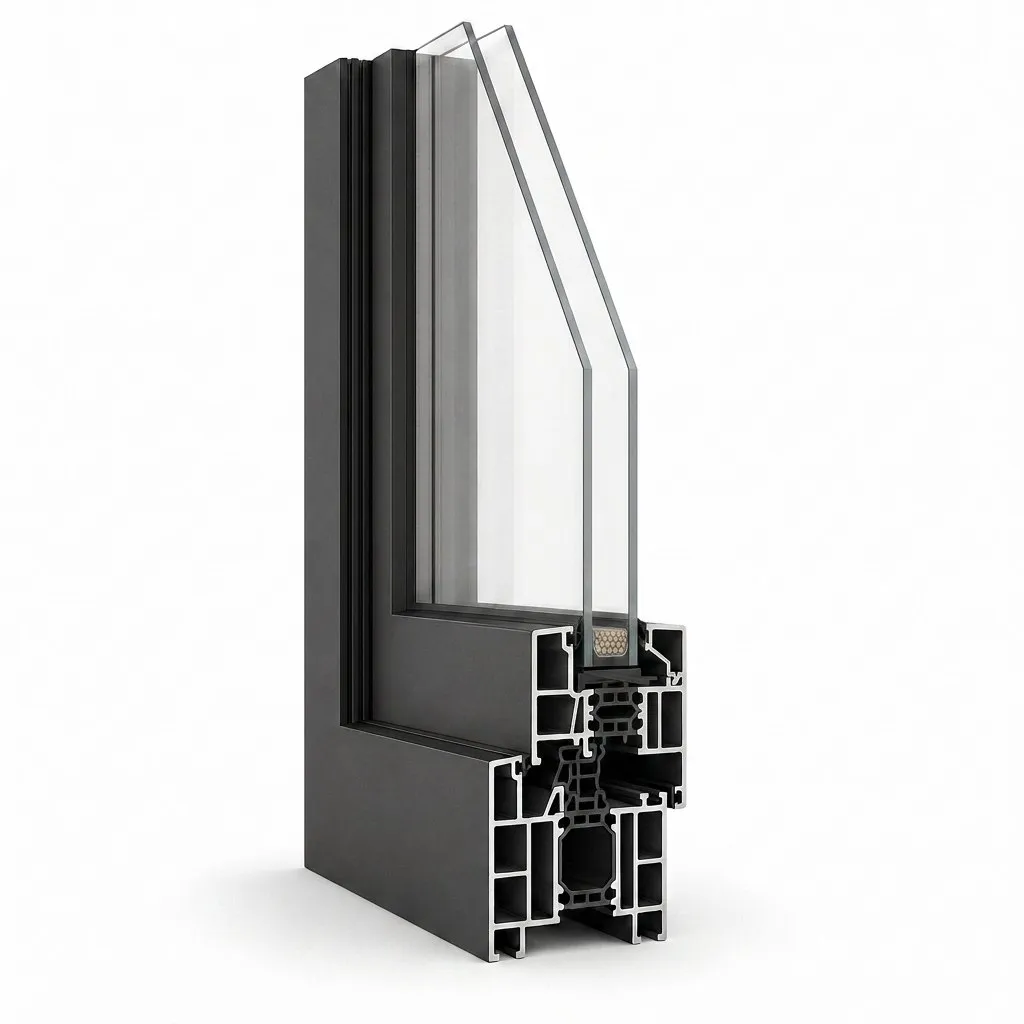
Fig. 05, 06 Material property data; published maxima of the premium sliding systems (750 to 1,200 kg per panel) against plastic lift-slide sashes (150 to 350 kg).
THE SIX SYSTEMS ON THE AUSTRALIAN MARKET, SCORED
Compare the frame first. Here's every system, scored.
Would you build a house with no insulation in the walls? No? Then why buy a window with no insulation inside?
SoComm Thermal Break
Solid aluminium with thermal break insulation built through its core to prevent cold travelling through the frame. Strong, zero maintenance, lasts a lifetime.
Verdict - Clear winner, every day of the week. Ticks all the boxes. Thermally Broken Aluminium is universally accepted as the superior window system for high end construction.
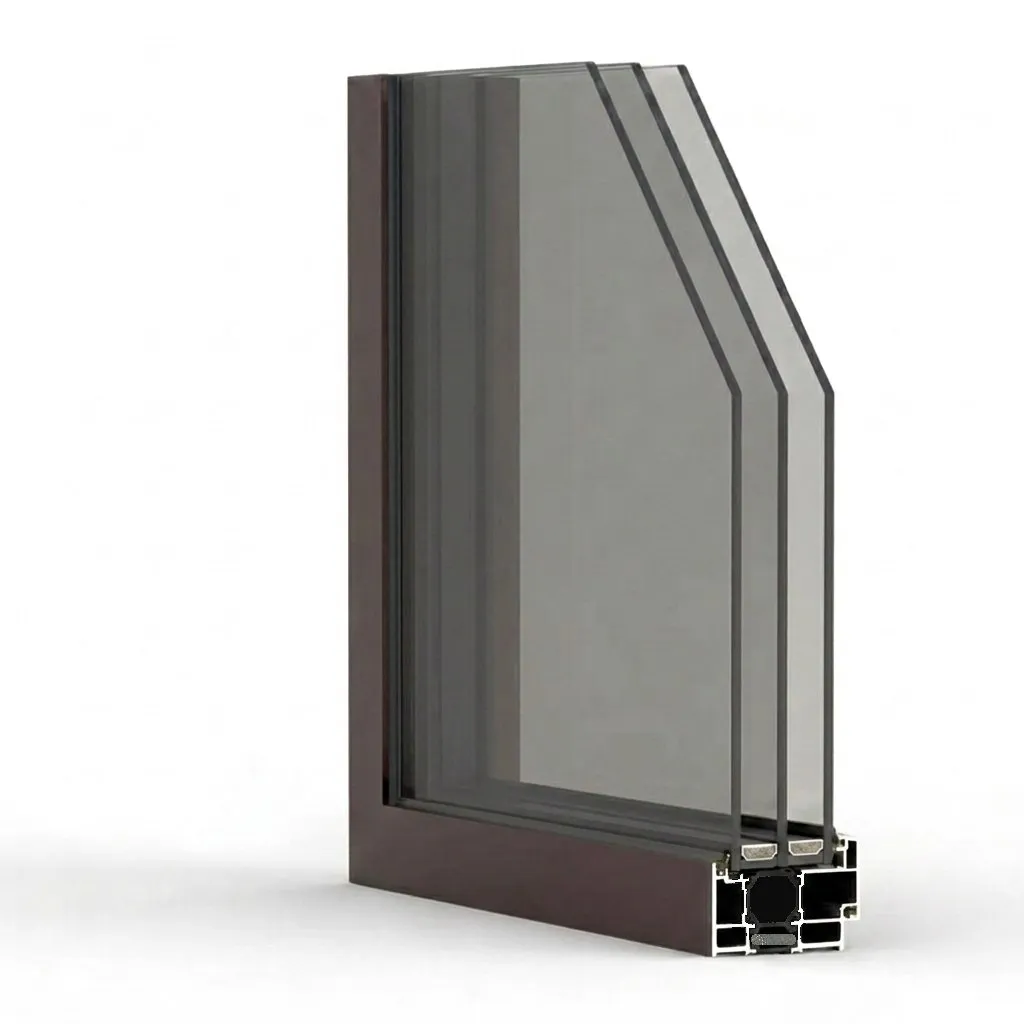
SoLux Ultra-Slim
Frames so slim they nearly disappear. What architects specify for ultra-luxury modern builds. Can become pricey.
Verdict - Most impressive looking ultra-slim window system in the world. Only if budget allows.
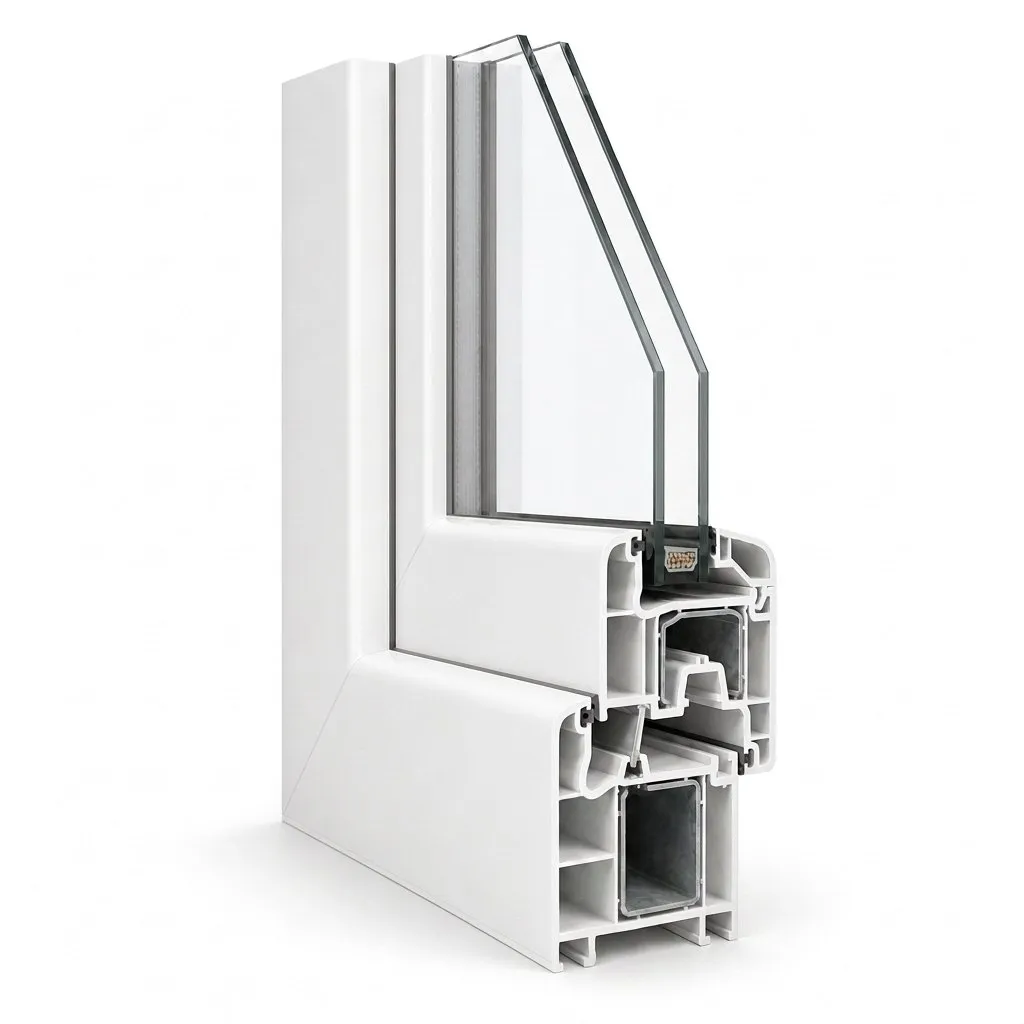
uPVC
Plastic frames. Insulate well, but Australian sun is hard on plastic. Even if it's “UV Stabilised”. Large windows, sliding doors and bi-folds flex with direct sun and heat, requiring adjustment and maintenance way more often than promised.
Verdict - Works well for Passive House types and smaller size Tilt & Turn windows. Not recommended for large sliding doors, bi-folds, floor to ceiling windows and doors.
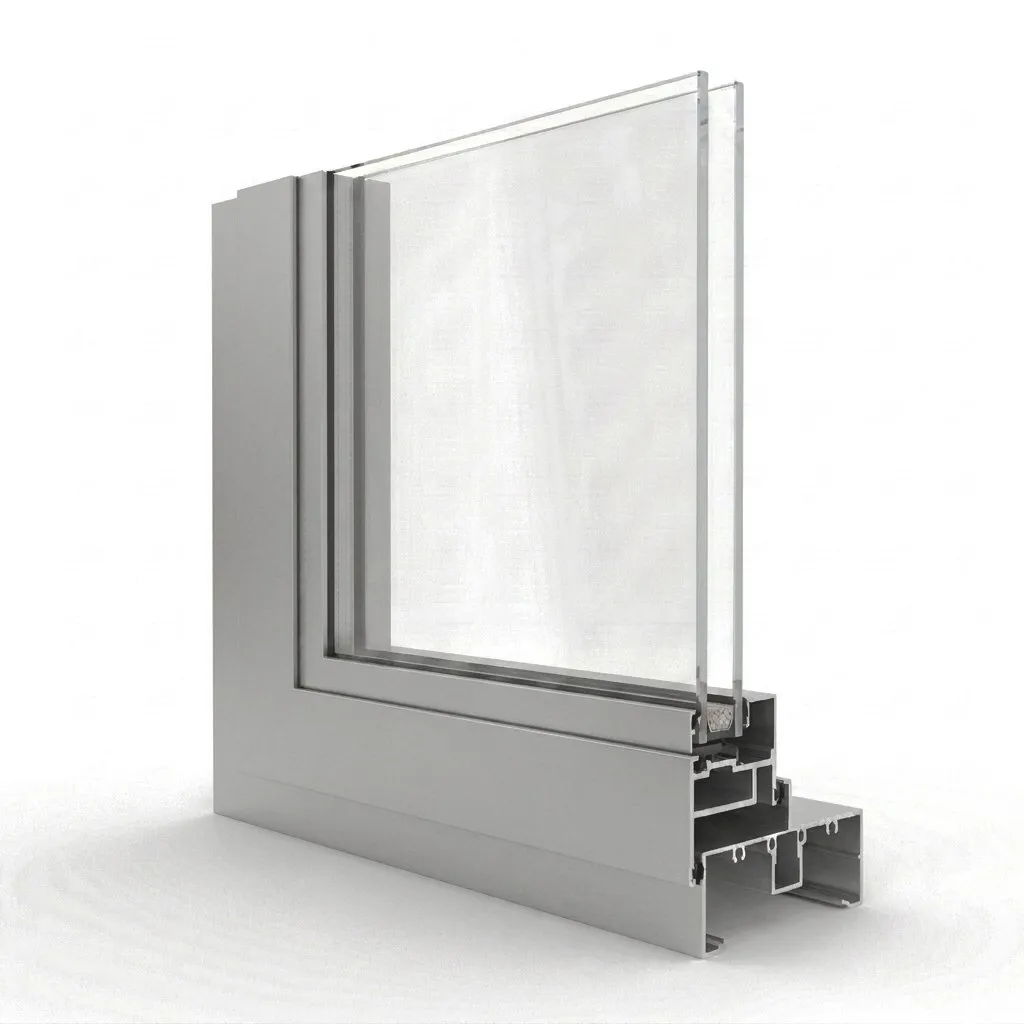
Semi-commercial aluminium
Semi-decent builder-grade aluminium, but no insulation inside. The cold walks straight through.
Verdict - The builder's choice to build and sell. Not recommended for homeowners to live with.
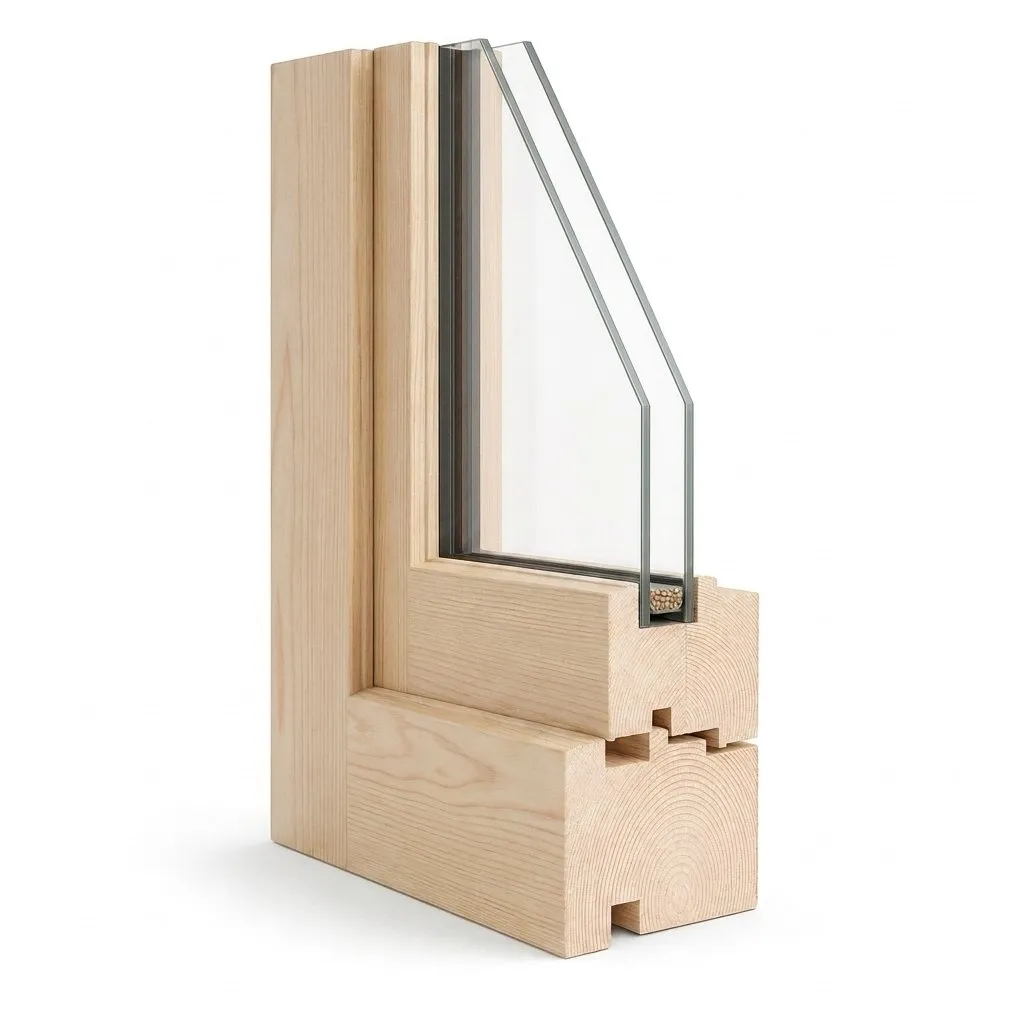
Timber
Beautiful, insulates very well. Would be rated higher if the maintenance, swelling, staining and sticking wasn't a concern.
Verdict - Only if you'll truly keep up the maintenance.
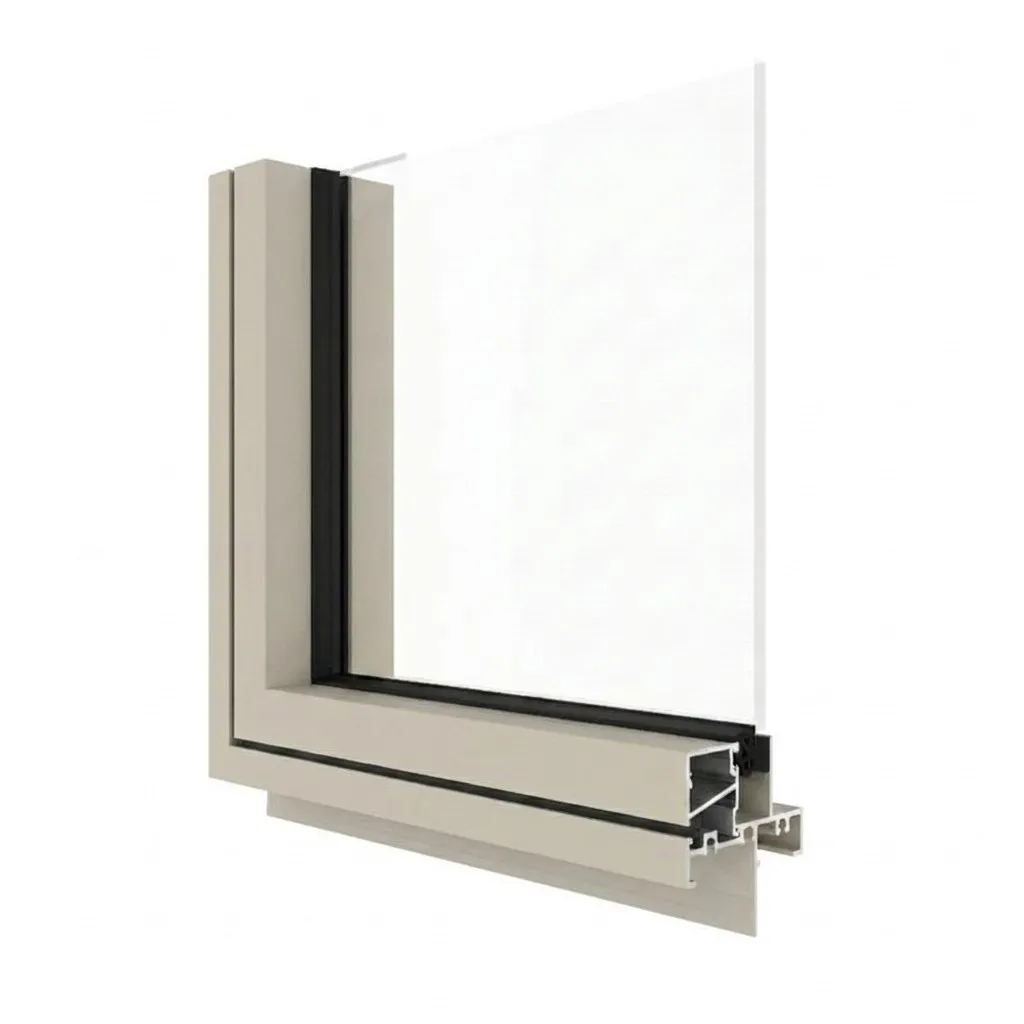
Domestic aluminium
One thin skin of metal. Zero insulation. Super cheap product. Used by volume builders.
Verdict - Should be illegal.
Scored out of 10 on each of five things; the total is out of 50. Our own scoring, our own words. Thermally broken aluminium and SoLux are ours; the rest are what you will be quoted elsewhere.
That is the whole test.
Thermally broken or not. Dark colour in Australian sun or not. Big glass and slim frame or not. Ten years on. Put those questions to every quote you get, and you will read them all differently.
Book a showroom visit →